1
Contextual Inquiry
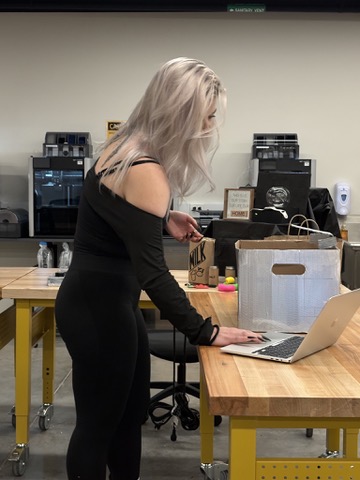
Social presence matters. Even light social presence increased follow-through.
Case Study · Toasty
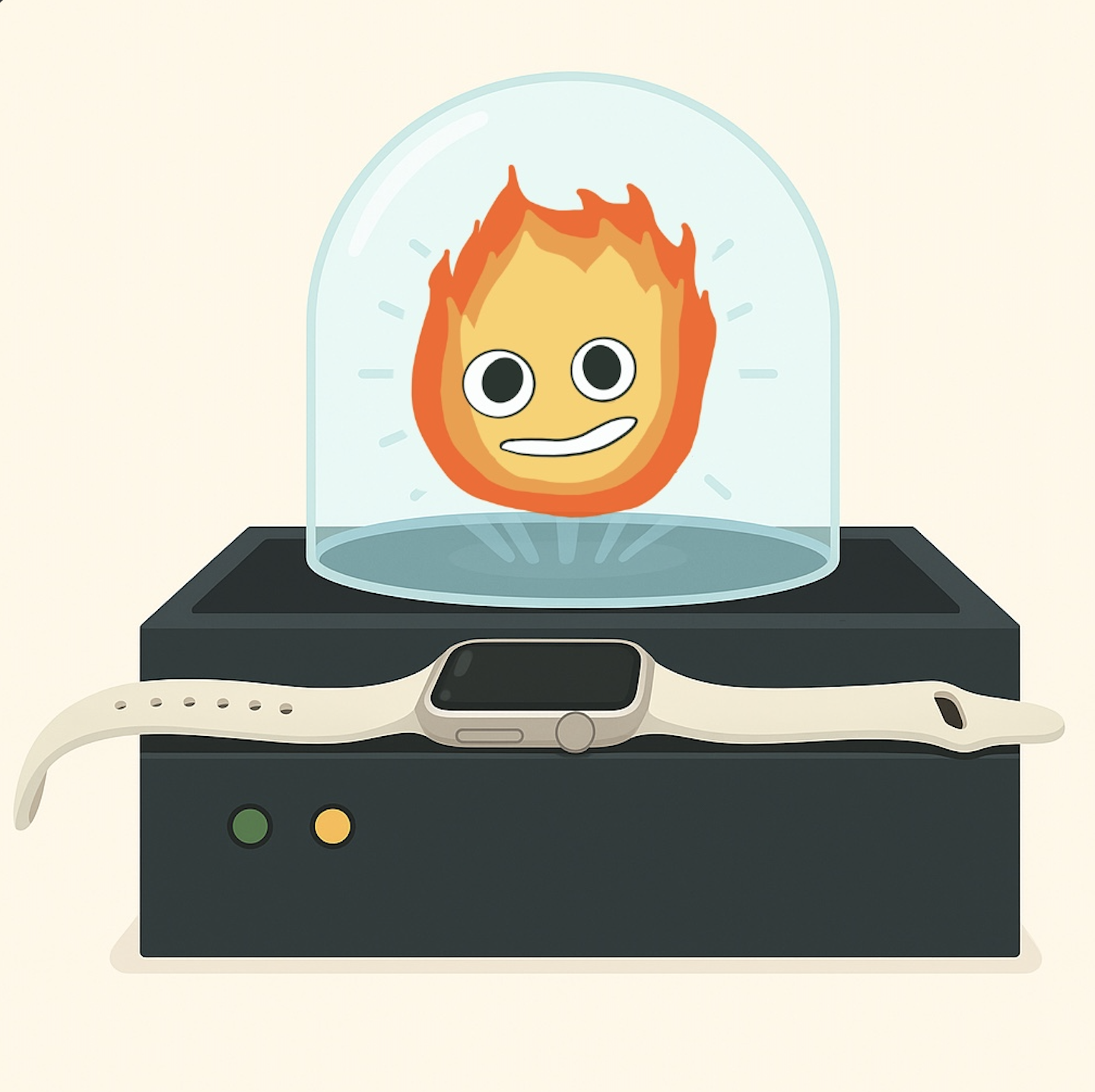
Toasty is an emotionally intelligent smart home companion designed to help adults with executive dysfunction start and complete daily tasks. By adapting its tone, pacing, and guidance to a user’s emotional state and energy levels, Toasty reduces overwhelm and brings clarity to moments when the “first step” feels impossible.
Value Proposition: Toasty turns overwhelming tasks into approachable moments through adaptive emotional support and smart home integration.
Why this problem matters
Adults with executive dysfunction often struggle most with getting started, not with the tasks themselves. Our formative work revealed that fatigue, unclear starting points, decision overload, and emotional overwhelm are the most persistent barriers. Everyday tasks like cooking, dishes, and laundry become disproportionately difficult because users lack energy, structure, and social presence.
Across our research, participants repeatedly described a gap between intention and action. They could see the mess in the kitchen, or the pile of laundry—but lacked the energy or clarity to begin. When energy was low, even small tasks felt cognitively heavy.
Traditional productivity tools assume consistent focus and stable energy. Our participants’ realities were different: time blindness, fluctuating capacity, and emotional drag made “just use a to-do list” unrealistic. They needed tools that could sit with them in these moments, not judge them for struggling.
Capable and motivated, but struggling with initiation.
Our audience is adults who experience executive dysfunction—people who are capable and motivated, but who routinely struggle with task initiation, planning, and energy regulation. These challenges appeared across our survey participants regardless of diagnosis.
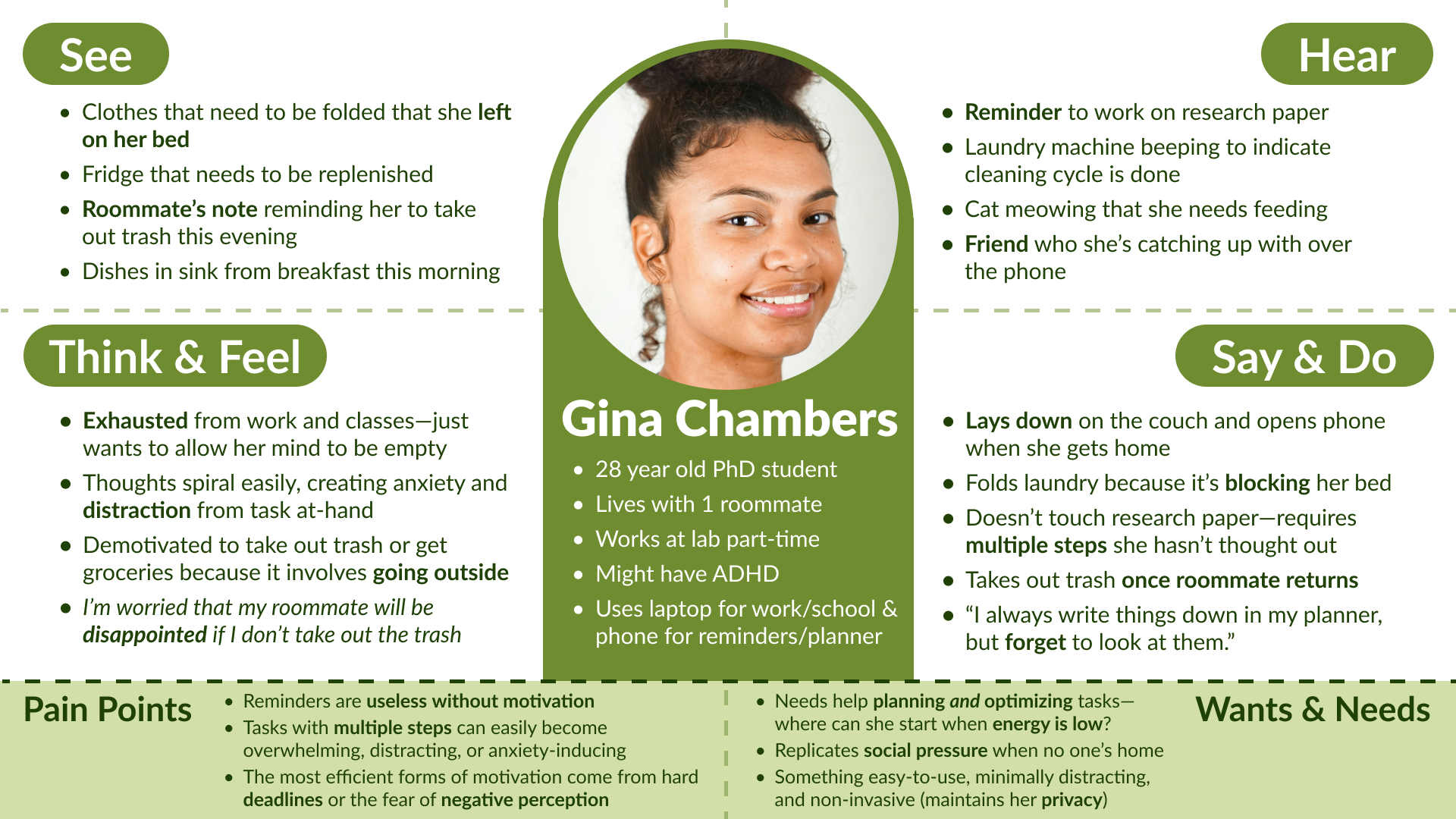
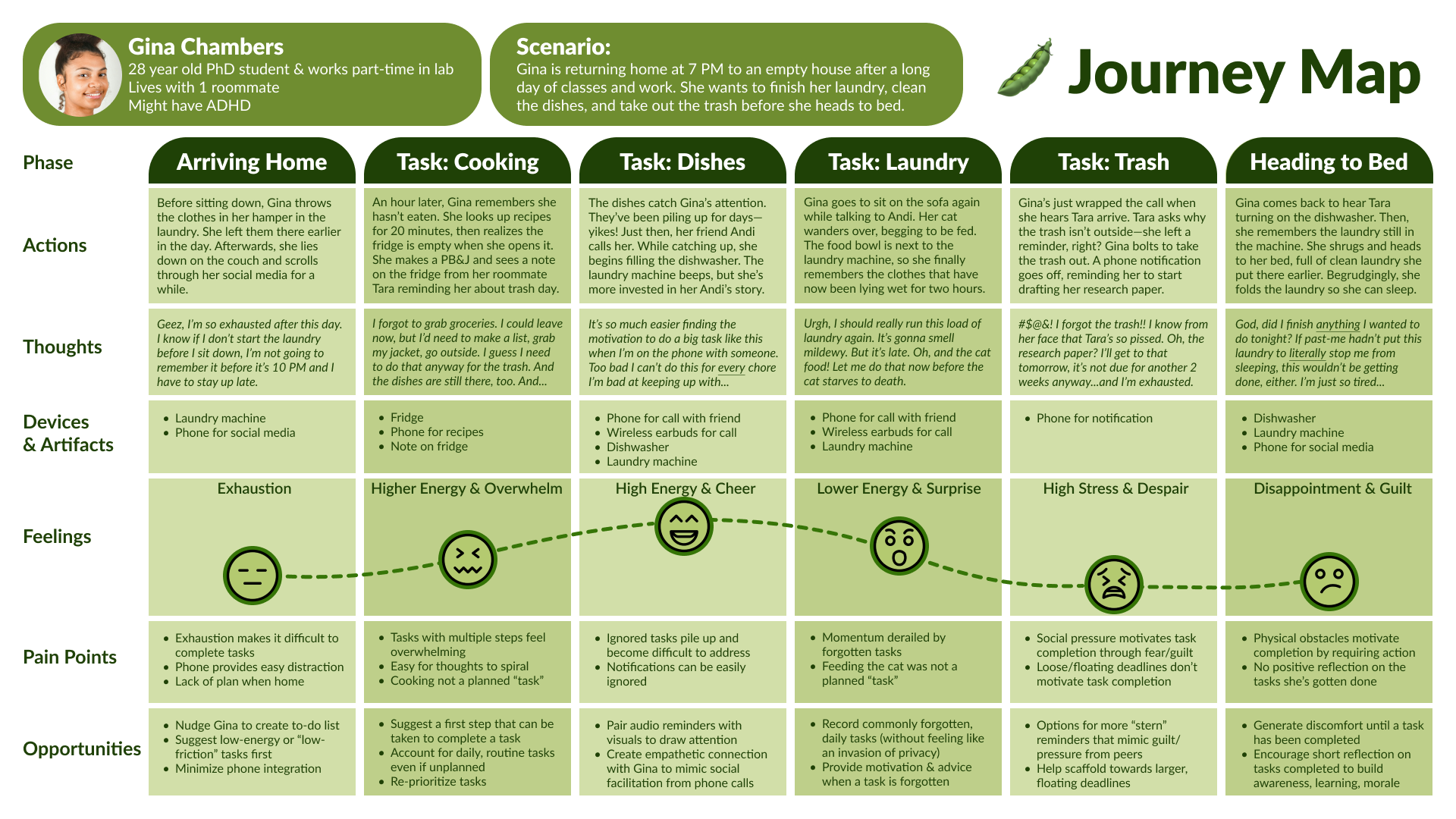
Gina is a 28-year-old PhD student. When she gets home, exhaustion sets in. She sees the dishes, the reminders—and still can’t start. Her thoughts spiral, tasks stack, and decision-making becomes overwhelming. She’s most successful when she feels a gentle sense of social presence.
.png)
Users freeze when the first step isn’t clear.
92% cited energy depletion as the biggest obstacle.
Gentle acknowledgment increased follow-through.
Supportive tone felt motivating; pushy tone felt intrusive.
A five-step research process to uncover the real needs.
Social presence matters. Even light social presence increased follow-through.
Initiation is harder than completion. Started tasks were easier to finish.
Fatigue is the quiet saboteur. It's not about lack of motivation.
Cooking (92.3%) and cleaning (74.4%) are the top struggle areas.
Tone makes or breaks the experience. Adaptive personality is key.
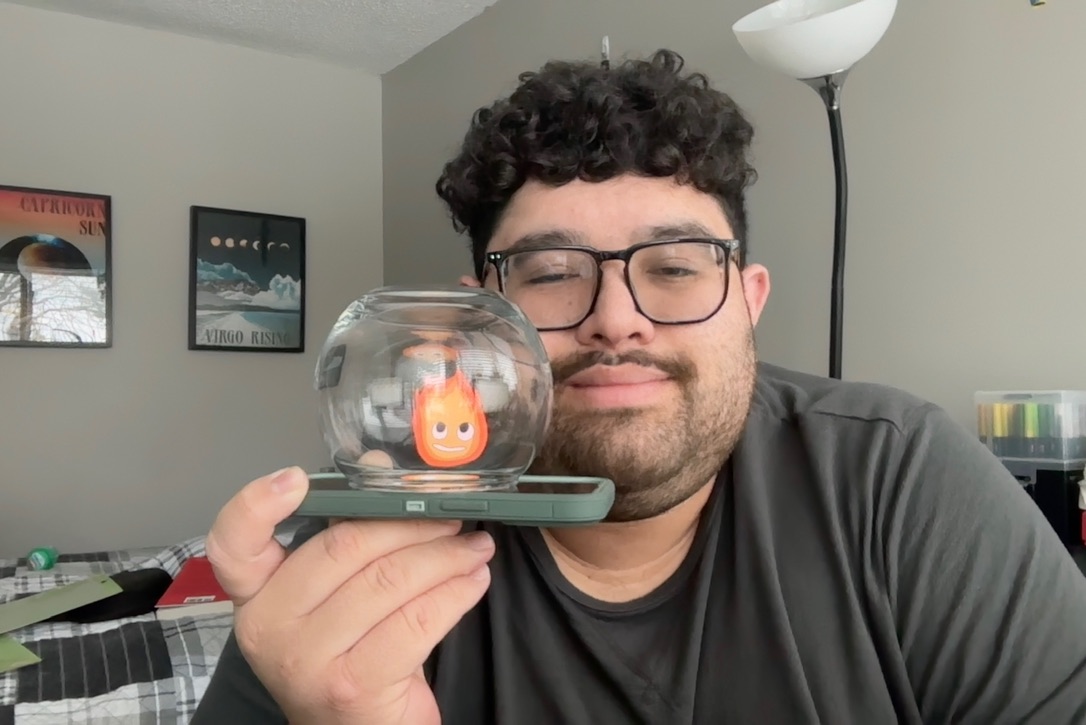
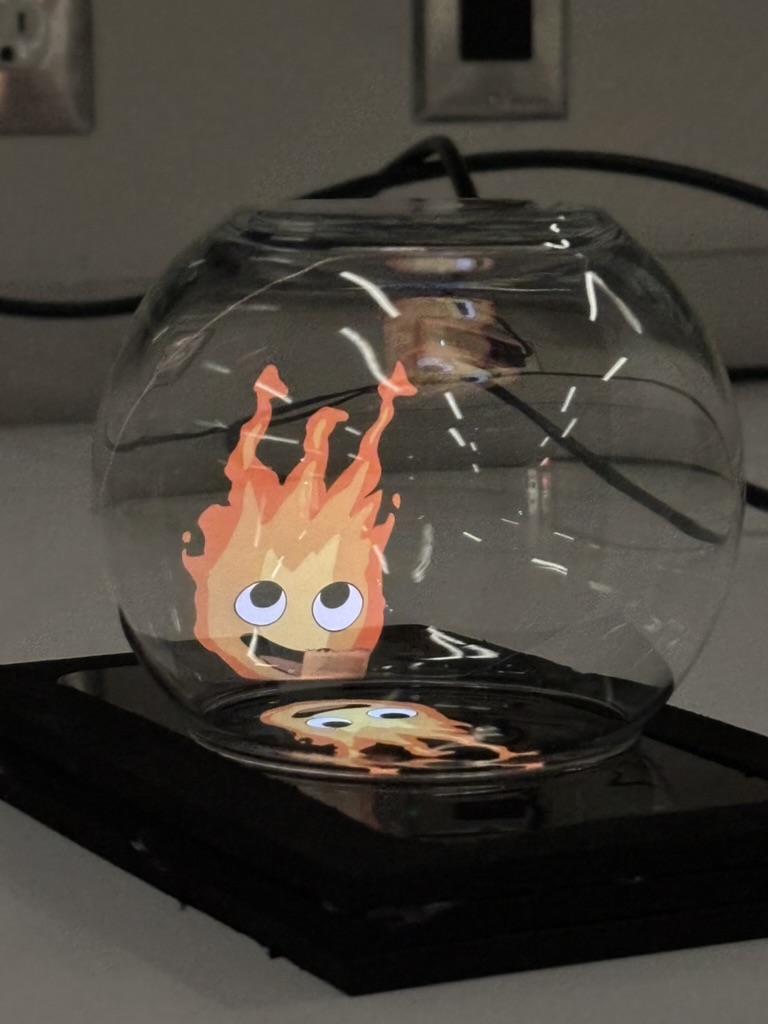
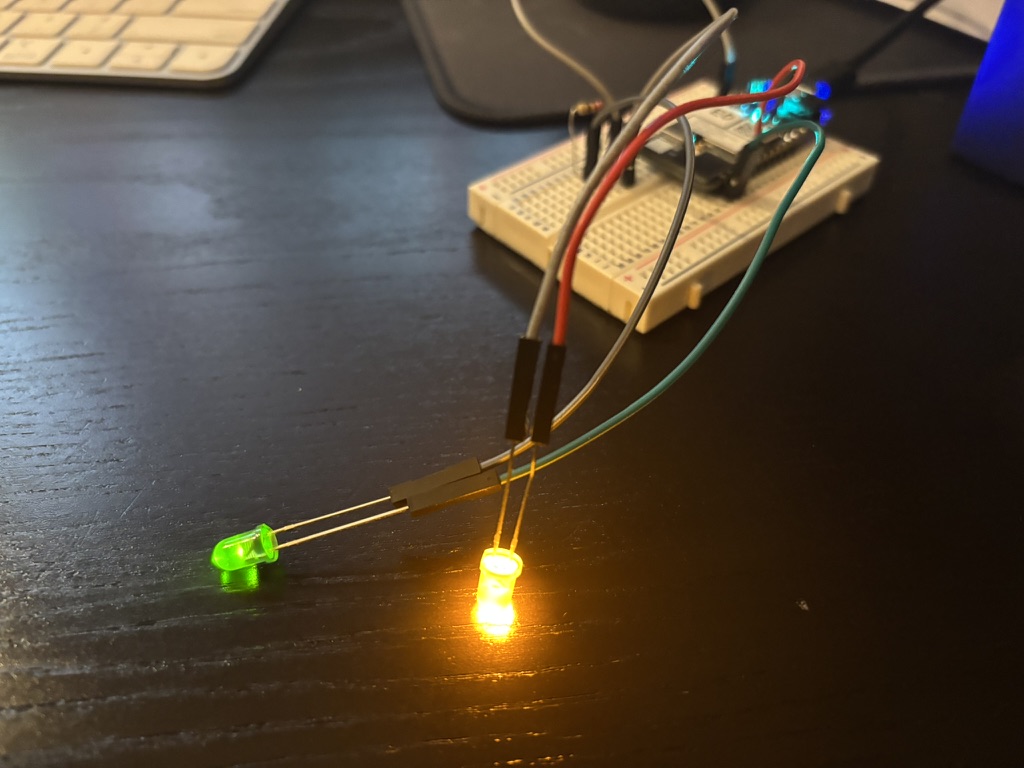
Your Adaptive Home Companion
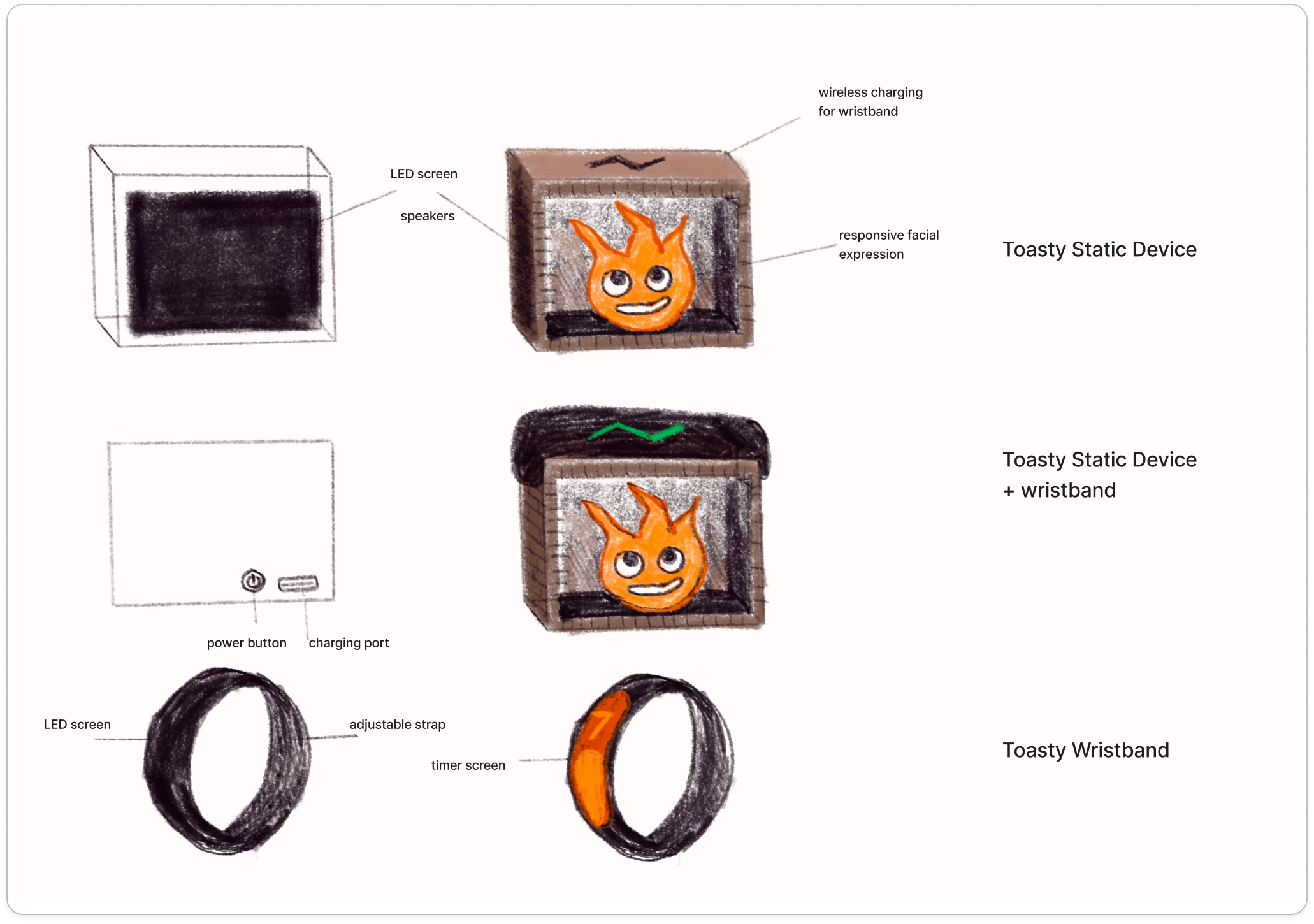
Toasty combines emotional intelligence, adaptive prompting, and smart home integration to support adults with executive dysfunction across the hardest moments of the day.
Adjusts voice, tone, and pacing to match your energy.
Provides warm ambience, clear starting points, and comforting feedback.
Lightweight portable support that travels with you.
Timers, lights, and environmental cues bridge the gap.
Lessons learned and the path forward.
Designing and demoing Toasty over the past several months led to a variety of lessons learned, tough decisions, and ideas for the future.
Toasty currently relies on voice and visuals. Future inclusivity goals include:
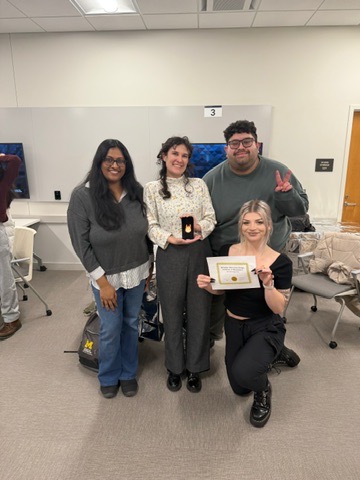
We are PEEA Pod. Four students passionate about using technology to make daily life more accessible.
Project Manager
Kept the team blazing forward. Coordinated team efforts, kept deliverables on track, and supported the team through each phase of development.
Front-End Engineer
The fuel for presentations. Built the Toasty website and underlying presentation framework, managed digital assets, and performed in live demonstrations to showcase Toasty’s behavior in context.
Creative Prototyper & Animation Designer
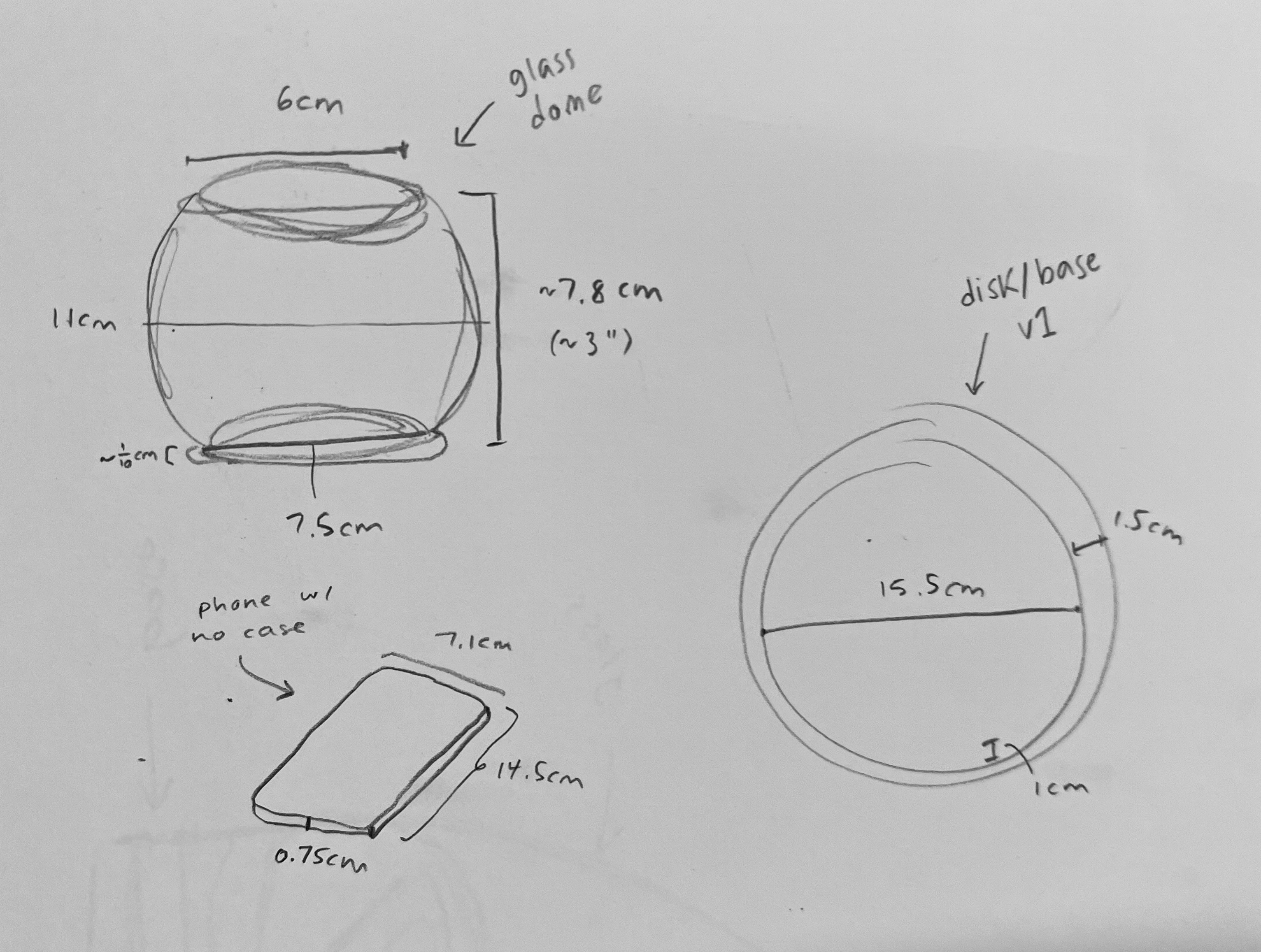
Made a hearth a home. Designed Toasty’s expressive animations and 3D-printed components to bring Toasty’s form and personality to life.
Technical Architect
The logic behind the spark. Bridged product goals with feasible system behavior, shaping Toasty’s wearable–hub relationship and the system’s technical direction.
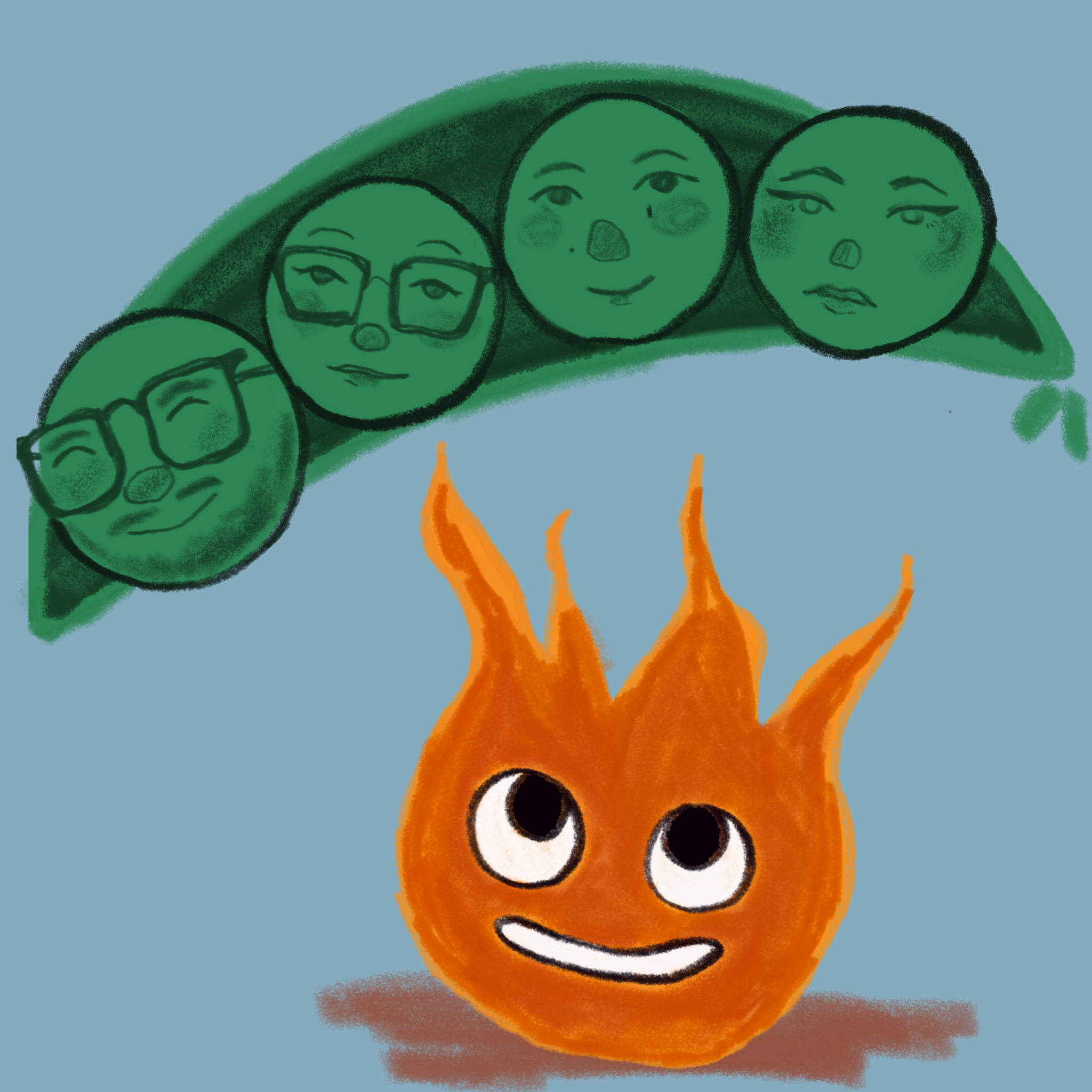
Our team name comes from our initials: Patrick, Emmaline, Erin, and Ashita. It's P-E-E-A... like Peas in a Pod! We stick together to solve tough problems.